

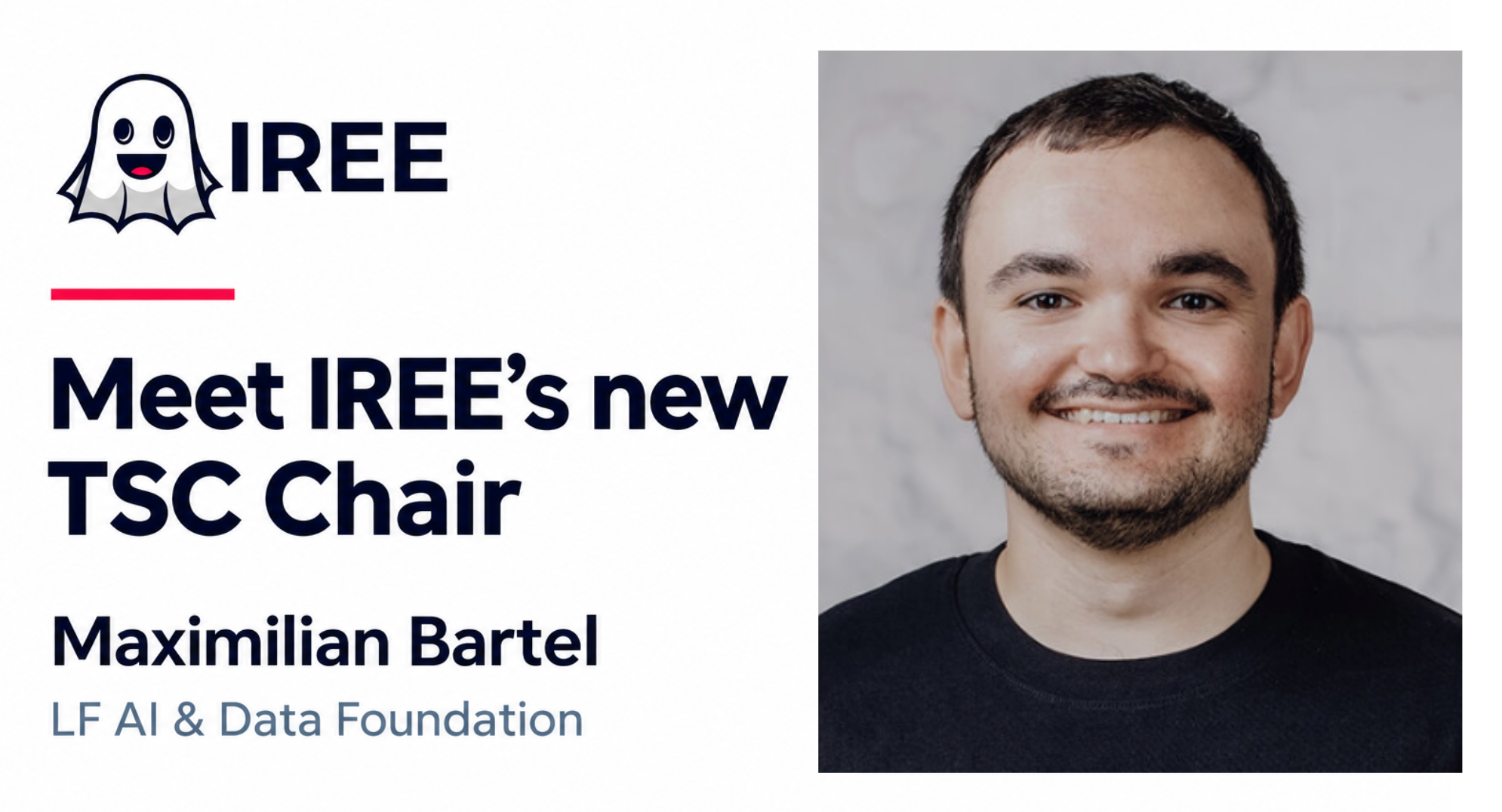
By Maximilian Bartel, CTO of Roofline and Chair of the IREE Technical Steering Committee
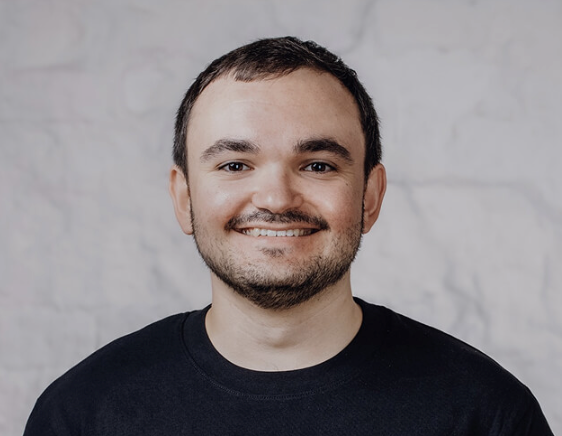 As AI models evolve and deployment hardware becomes more diverse, teams increasingly need shared compiler and runtime infrastructure to avoid maintaining a separate software deployment stack for each chip.
Built on MLIR, IREE lets developers easily deploy AI models to a range of hardware through a single compiler and runtime. The project implements generic components that lower AI models to unified intermediate representation that can be understood by CPUs, GPUs and NPUs. IREE is a sandbox-stage project of the LF AI & Data Foundation, and on 20 August 2026, I became Chair of IREE’s Technical Steering Committee (TSC).
The TSC provides technical oversight for IREE, and the committee and wider contributor community shape the project’s direction together. As Chair, I help coordinate discussions and support collaboration across the project.
I see four areas of IREE’s development where collaboration matters most:
- Maintaining and extending hardware backends
- Strengthening AI model importers and StableHLO integration
- Improving usability for both traditional inference and generative AI
- Contributing to the upstream MLIR project
As CTO of Roofline, I’ve contributed to IREE since 2024. At Roofline, we build on IREE for our compiler and runtime stack, which we use to deploy AI models across diverse heterogeneous hardware.
Making IREE easier for contributors
IREE has grown into a project supporting a wide range of hardware targets and AI workloads. For example, it compiles models for Arm, x86, and RISC-V CPUs and GPUs through Vulkan, ROCm/HIP, CUDA, and Metal. Continuing to develop and maintain the project requires contributions from engineers with different areas of expertise, especially as we see accelerators such as NPUs emerge. The newest addition to IREE will be for Qualcomm Hexagon, the first real NPU in upstream IREE, with more architectures to follow.
While the more common targets are often developed with some sort of independence from the company that designed the hardware, NPU targets often need more detailed architecture knowledge. I want to make it easier for engineers to bring up their backends faster and more easily in IREE. Very much like LLVM, being a backend in upstream IREE should signify that the backend is part of the standard everyone uses.
I also want to make it easier to develop and maintain independent backends whilst contributing to and keeping up with the upstream project. An important milestone for this was the inclusion of dynamic plugins in IREE.
IREE’s continued development will be successful if we make it easier for:
- New contributors to find useful work and get support from the community.
- Backend developers to add, extend, and maintain targets.
- Anyone to compile and run models with clear documentation and working examples.
First-party StableHLO support would reduce the common work required by hardware
StableHLO provides a standardized representation of machine learning operations, allowing models from different frameworks to connect with shared compiler infrastructure. IREE already accepts models represented in StableHLO, but my goal for IREE is first-party support, so that it becomes the entry point to IREE’s main compiler.
Part of this work will be the addition of import paths from all relevant frameworks to StableHLO. First-party support will also make it easier to target more accelerators, including NPUs, and improve support for handwritten kernels. Such kernels are often written on a high-level graph abstraction which StableHLO represents naturally. An example would be a kernel that would fuse a convolution with an activation originally written for ONNX RT. With StableHLO we can match this easier and reuse the kernel for other frameworks like PyTorch or LiteRT where possible.
Engineers will still need to do some hardware-specific backend engineering, but improvements to the shared compiler infrastructure can reduce the common functionality developers need to implement separately for each target. For example, a team adding an NPU backend would still write the target-specific code, but wouldn’t need to build separate support for each model framework.
Getting from installation to a running model in as few steps as possible
IREE’s development needs to address the practical experience of developers building and deploying AI applications. It should be straightforward for a developer to run their AI models on a range of hardware using IREE.
The project already supports a range of machine learning workloads, from traditional inference to generative AI. However, it needs to be easier to integrate IREE with software applications, and I want a new user to be able to get from installation to a model running on their hardware target with as few steps as possible. Generative AI workloads bring requirements that traditional inference often doesn’t. LLMs generate text one token at a time, and a key-value (KV) cache must be carried from one step to the next. The IREE runtime already provides the building blocks to orchestrate this, but there isn’t yet an end-to-end example showing how to put them together. Adding one would give developers a clear starting point for running generative AI models with IREE.
Making IREE easier to use will also help attract new contributors. Developers who can understand and work with the project more easily are better positioned to identify issues, propose improvements, and contribute functionality.
Contributing upstream to MLIR lets multiple projects share engineering work
IREE builds on MLIR, and many of the dialects used by the project are developed and maintained by the wider LLVM and MLIR community. Continuing to engage closely with upstream MLIR development is therefore important for IREE’s long-term sustainability.
Contributing improvements upstream allows multiple projects to benefit from shared engineering work and reduces the need to maintain separate implementations of common functionality. For example, Linalg, one of IREE’s core dialects, is used by many projects across many companies. Small improvements can bring major benefits for the whole community.
Closer collaboration between IREE and upstream MLIR will help strengthen the common compiler infrastructure used across the broader ecosystem.
Join the IREE community
IREE depends on contributions from engineers, researchers, hardware vendors, and organizations with different technical backgrounds.
There are many ways to participate:
- Report issues and suggest features
- Maintain an existing backend or add support for new hardware
- Improve compiler and runtime components
- Contribute examples and documentation
- Join technical discussions
Both IREE Community Meetings and TSC meetings are open to anyone. Community Meetings provide a place to share technical work, discuss ongoing developments, and connect with other contributors. TSC meetings offer an opportunity to participate in discussions about the project’s technical direction and governance.
On the IREE website, you can find information about IREE Community Meetings and read the contribution guidelines. On GitHub, you can explore the IREE repository.
I’m looking forward to supporting the TSC and working alongside the IREE community as we continue improving the project’s compiler infrastructure, hardware support, and developer experience.
