

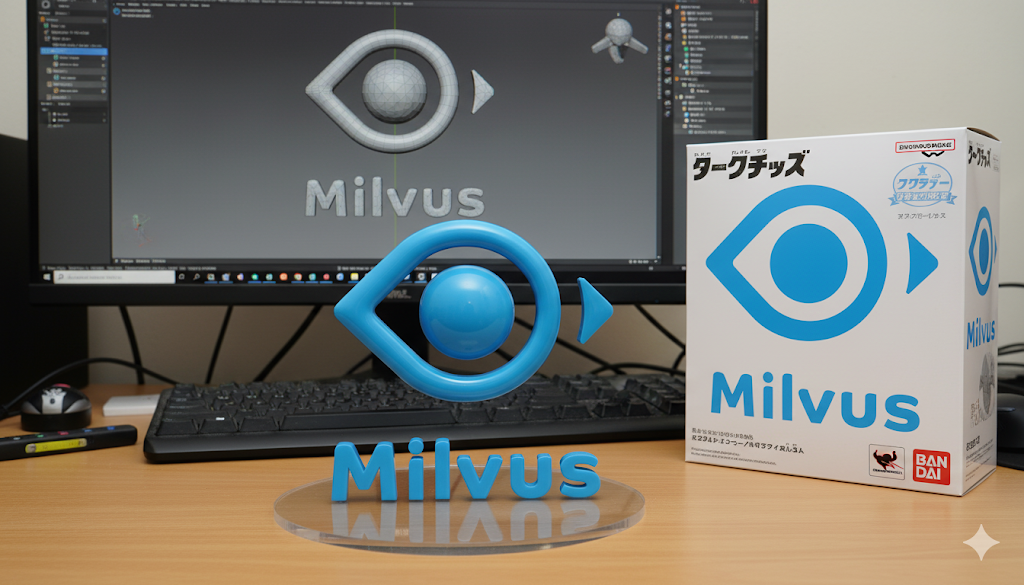
Building Enterprise-Ready Multimodal RAG with Milvus
(Originally published on the Milvus blog by Lumina Wang) As multimodal AI continues to expand, from text-to-image generation to intelligent retrieval systems, developers are looking for ways to make these models not only creative but also production-ready. The open source vector database Milvus is showing how this can be done… Read more.
Leverage LLM for Next-Gen Recommender Systems: Design Patterns for Cost-Aware and Ethical Deployment
Author: Nishant Satya Lakshmikanth, Engineering Leader, LinkedIn Corporation Introduction In Part 1, we set the stage by examining how recommender systems evolved—from rule-based heuristics to deep learning and now toward LLM-powered, context-aware intelligence. Part 2 dove into the architectural and modeling layers that bring this transformation to life, covering embedding… Read more.

ACP Joins Forces with A2A
By: Kate Blair, Director of Incubation, IBM Research & Todd Segal, Principal Software Engineer, Google IBM Research launched the Agent Communication Protocol (ACP) in March 2025 to power its BeeAI Platform, an open-source platform exploring agent interpretability. Later that month, the BeeAI project—and with it, ACP—was donated to the Linux Foundation, solidifying our… Read more.
Leverage LLM for Next-Gen Recommender Systems: Technical Deep Dive into LLM-Enhanced Recommender Architectures
Author: Nishant Satya Lakshmikanth, Engineering Leader, LinkedIn Corporation Introduction In Part 1, we explored how Large Language Models (LLMs) are expanding the scope of recommender systems—from passive prediction tools to conversational, context-aware agents. But the real shift begins when these conceptual promises are translated into architecture and code. As organizations… Read more.
Leverage LLM for Next-Gen Recommender Systems: The Evolution of Recommender Systems and Rise of LLMs
Author: Nishant Satya Lakshmikanth, Engineering Leader, LinkedIn Corporation Introduction Recommender systems have come a long way—from basic rule-based approaches to sophisticated machine learning pipelines that serve billions of personalized suggestions daily. This part sets the stage by tracing that evolution and introducing how large language models (LLMs) are transforming the… Read more.
LF AI & Data Day Singapore 2025: Highlights from “Agent for SWE”
On July 11, 2025, LF AI & Data Day Singapore gathered developers, researchers, and open source contributors at TikTok’s One Raffles Quay office to explore how intelligent agents are reshaping software engineering. The program featured: SWE-Perf – a new benchmark from TikTok to measure LLM-driven code performance optimization. Production-ready agent… Read more.
Building an International Open Source AI Initiative
Authors: Victor Lu, Consultant, Independent; Susan Malaika, Senior Technical Staff, IBM Artificial Intelligence (AI) is no longer just a buzzword—it’s a transformative force reshaping industries, research, and everyday life across the globe. As AI systems grow more powerful and pervasive, ensuring their trustworthy, ethical, and reliable development has become a… Read more.

From Zero to Agent: A Practical Guide to Building Your First Agentic Application
By Jason T. Clark This is Part 3 of a three-part blog series on the Rise of Agentic AI and how open source, and the LF AI & Data community, is playing a role. Despite their transformative potential, agentic development approaches face several significant technical challenges. Reliability remains a primary… Read more.

Building Intelligent Systems: The Four Pillars and Design Patterns of Agentic AI
By Jason T. Clark This is Part 2 of a three-part blog series on the Rise of Agentic AI and how open source, and the LF AI & Data community, is playing a role. Agentic AI systems differentiate themselves through their ability to think through problems, evaluate options, and make… Read more.
The Rise of Agentic AI: Why Developers are Trading Code for Conversation
By Jason T. Clark This is part 1 in a multi-part blog series on the Rise of Agentic AI and how open source, and the LF AI & Data community, is playing a role. Agentic AI represents a fundamental evolution in how intelligent systems operate. Unlike traditional software that simply… Read more.
