

This is companion piece to the original blog post that was posted last year
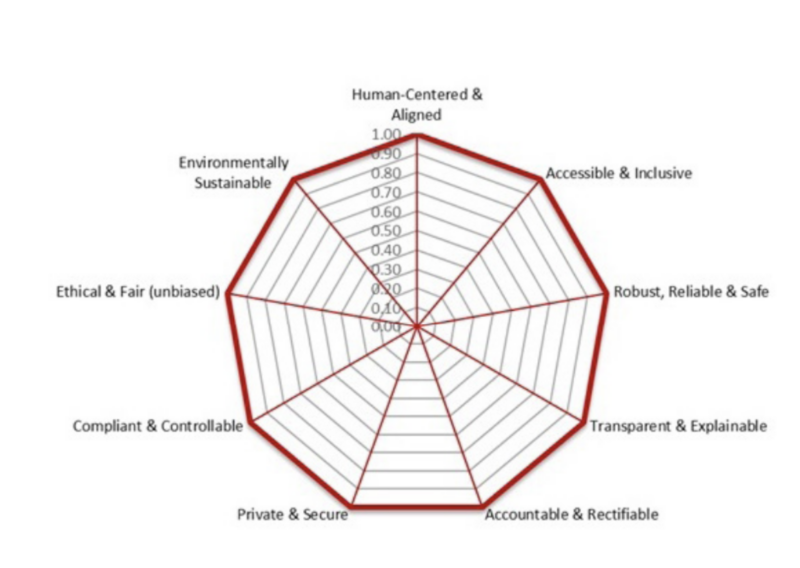
The conversations surrounding responsible artificial intelligence have evolved considerably. The industry has progressed beyond debating the importance of responsible AI to confronting the practical challenges of systematic implementation. The Linux Foundation AI & Data’s Responsible Generative AI Framework (RGAF) establishes a comprehensive foundation by defining nine critical dimensions that trustworthy GenAI systems must address, encompassing fairness, robustness, privacy, sustainability, and related considerations.
However, a framework alone cannot execute. The fundamental challenge confronting development teams and compliance professionals lies in translating these high-level principles into tangible technical implementations within existing AI pipelines. The practical questions demand technical solutions: How does one instrument a system to demonstrate accountability? What mechanisms enable real-time verification of fairness? How can organizations generate auditable evidence that satisfies regulatory requirements without impeding development velocity?
TrustyAI: Bridging Principles and Practice
The TrustyAI project (https://trustyai.org/docs/main/main) addresses these challenges directly by providing an open-source toolkit designed to operationalize the RGAF. It furnishes the technical infrastructure necessary to measure, monitor, and enforce responsible AI dimensions, effectively transforming a static framework into continuously verifiable components integrated throughout the software development lifecycle. Rather than treating responsible AI as an ancillary compliance activity, TrustyAI embeds these capabilities into the development tools and pipelines that engineering teams already utilize daily.
Technical Implementation of Framework Dimensions
The fundamental technical strength of combining TrustyAI with the RGAF lies in its precise, one-to-one correspondence between framework dimensions and deployable tooling. The project currently delivers instrumentation for the first seven dimensions through an integrated suite of capabilities.
For the robustness, reliability, and safety dimension, TrustyAI implements guardrails that function as technical control mechanisms. These guardrails actively prevent prompt injection and jailbreak attempts while ensuring that all outputs remain within predefined safe operational boundaries before reaching end users. This provides a preventive layer of protection rather than merely detecting issues after they occur.
The ethical and fairness dimension receives attention through live-bias metrics that operate continuously within production environments. Organizations can integrate TrustyAI to monitor model outputs across demographic groups, generating real-time statistical signals when bias emerges in response to evolving user populations or shifting data distributions. This approach elevates fairness from a periodic audit artifact to an ongoing operational concern that receives continuous attention.
Transparency and explainability requirements receive equally rigorous technical treatment. For regulated industries where opaque models present unacceptable risks, TrustyAI generates comprehensive explainability logs that create auditable records tracing specific decisions back to influential input features or training data. These logs satisfy regulatory requirements for explanation while simultaneously providing developers with valuable insights into unexpected model behaviors.
The privacy and security dimension is operationalized through deployable privacy filters that automatically redact personally identifiable information from both prompts and generated outputs. This implements privacy-by-design principles at the inference layer, preventing sensitive data from appearing in logs or propagating to downstream systems.
Accelerating Regulatory Conformity
This tight technical integration between framework and tools produces significant downstream benefits, particularly in accelerating conformity with emerging regulatory requirements. Implementing the RGAF through TrustyAI provides organizations with a direct pathway toward demonstrating conformity with standards such as ISO/IEC 42001, the internationally recognized specification for AI management systems. The framework articulates the policy objectives and control requirements, while TrustyAI generates verifiable technical evidence demonstrating those controls in active operation.
For engineering teams, this represents a fundamental shift in how responsible AI is perceived and implemented. It ceases to be an abstract aspiration or a burden imposed by compliance functions and instead becomes an integrated set of practical tools: guardrails preventing harmful outputs, monitors detecting emerging bias, loggers enabling comprehensive traceability, and filters protecting user privacy. These tools render GenAI applications demonstrably safer, more transparent, and audit-ready from initial deployment, all while integrating seamlessly into established development workflows.
Conclusion
The combination of a comprehensive framework and a practical implementation toolkit finally provides engineering organizations with what they have required: a clear, navigable path from responsible AI principles to production-ready implementations. For additional information about TrustyAI and its application in operationalizing the RGAF, please refer to the detailed documentation (https://docs.google.com/document/d/1HhgsG2mfktC0SfdbXVQVlDR62TrOn4xa/edit#heading=h.zd0ztsijx2nd)

